
In moment’s presto- paced digital world, businesses must continuously evolve to keep up with changing consumer geste , technological advancements, and adding competition. Traditional marketing styles alone are no longer sufficient to sustain growth. This is where digital marketing services play a pivotal part.
Digital marketing has converted the way businesses connect with their followership. From hunt machines to social media platforms, guests now calculate heavily on digital channels to discover, estimate, and engage with brands. As a result, businesses that fail to establish a strong online presence threat losing precious openings.
Digital marketing services have come essential for brands looking to make visibility, attract targeted cult, induce quality leads, and drive harmonious profit growth. Whether you’re a incipiency aiming to produce brand mindfulness, a small business trying to gauge , or an established enterprise seeking expansion, enforcing the right digital strategies can significantly impact your success.
In this comprehensive companion, we will explore everything you need to know about digital marketing services, including their significance, types, benefits, and how to choose the right strategy for your business.
What Are Digital Marketing Services?
Digital marketing services relate to a range of online strategies and ways used to promote products or services through digital channels. These services help businesses reach their target followership effectively and convert them into pious guests.
Unlike traditional marketing, digital marketing allows precise targeting, real- time shadowing, and measurable results. It focuses on engaging druggies where they spend utmost of their time online.
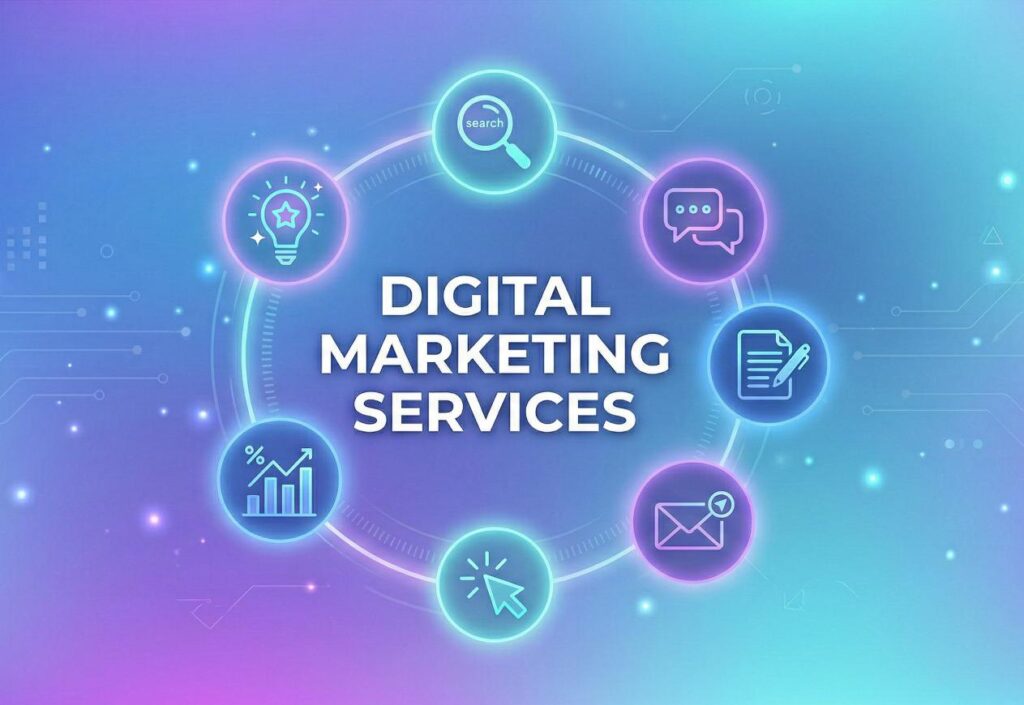
These services generally include
- Hunt Machine Optimization( SEO)
- Pay- Per- Click Advertising( PPC)
- Social Media Marketing( SMM)
- Content Marketing
- Dispatch Marketing
- Influencer Marketing
- chapter Marketing
- Web Design and Development
Each of these plays a unique part in erecting a strong digital presence.
Why Digital Marketing Services Are Important
In the modern business landscape, the importance of digital marketing services has grown rapidly over the past decade. As consumers increasingly rely on the internet to research, compare, and purchase products or services, businesses must establish a strong digital presence to remain competitive.
Digital marketing is not just about promotion — it is about connecting with the right audience at the right time using the right strategy. Below are the key reasons why digital marketing services are essential for business growth:
1. Increased Online Presence
In today’s digital-first world, your online presence acts as the foundation of your brand. With billions of users actively browsing the internet every day, businesses that are visible online have a significantly higher chance of attracting potential customers.
Digital marketing services such as SEO, social media marketing, and content marketing ensure that your business appears where your audience is searching — whether it’s on search engines, social platforms, or websites. A strong online presence not only increases visibility but also builds credibility and trust among customers.
Without digital marketing, even the best products or services may go unnoticed.
2. Targeted Audience Reach
One of the biggest advantages of digital marketing services is the ability to reach a highly specific audience. Unlike traditional marketing, which often targets a broad and less-defined audience, digital marketing allows precise targeting based on:
- Age, gender, and demographics
- Interests and online behavior
- Location and language
- Purchase intent and browsing history
This level of targeting ensures that your marketing efforts are directed toward people who are most likely to be interested in your offerings. As a result, businesses can achieve higher engagement, better lead quality, and improved conversion rates.
3. Cost-Effective Marketing
Digital marketing services provide a more affordable alternative to traditional advertising methods such as TV, print, or radio. Businesses can start campaigns with flexible budgets and scale them based on performance.
For example:
- SEO generates long-term organic traffic without continuous spending
- Social media marketing allows low-cost promotions
- PPC campaigns can be optimized to control costs and maximize returns
This cost efficiency makes digital marketing especially beneficial for startups and small businesses that want to compete with larger brands without huge budgets.
4. Measurable Results
One of the most powerful aspects of digital marketing services is the ability to measure and analyze performance in real time. Tools like Google Analytics and advertising dashboards provide detailed insights into:
- Website traffic
- User behavior
- Conversion rates
- Campaign performance
- Return on investment (ROI)
These insights help businesses understand what is working and what needs improvement. Instead of guessing, companies can make data-driven decisions to optimize their strategies and achieve better results.
5. Improved Customer Engagement
Digital marketing creates opportunities for direct and meaningful interaction between businesses and their customers. Through channels like social media, email marketing, and live chat, brands can communicate with their audience in real time.
Engagement can include:
- Responding to comments and messages
- Sharing valuable and relevant content
- Running interactive campaigns (polls, contests, Q&A sessions)
- Providing personalized recommendations
This continuous interaction helps build strong relationships, increases customer satisfaction, and fosters brand loyalty. Engaged customers are more likely to trust your brand and become repeat buyers.
Types of Digital Marketing Services
Understanding the different types of digital marketing services is essential for businesses that want to build an effective online strategy. Each service plays a unique role in attracting, engaging, and converting potential customers.
Choosing the right combination of these services can significantly improve your brand visibility, lead generation, and overall business growth.
1. Search Engine Optimization (SEO)
Search Engine Optimization (SEO) is one of the most powerful and long-term digital marketing services. It focuses on improving your website’s visibility on search engines like Google, helping your business appear in front of users who are actively searching for your products or services.
SEO involves multiple components, including:
- On-page SEO: Optimizing website content, keywords, meta tags, headings, and internal linking
- Off-page SEO: Building backlinks from high-authority websites to improve domain credibility
- Technical SEO: Enhancing website speed, mobile responsiveness, and overall performance
- Local SEO: Optimizing your business for local searches (e.g., “near me” queries)
Crucial Benefits of SEO:
- Increased Organic Traffic
SEO helps your website attract callers without paying for advertisements. Advanced rankings mean further visibility and more clicks.
- Long- Term Results
Unlike paid advertisements, SEO continues to deliver results over time. Once your website ranks well, it can maintain its position with harmonious optimization.
- bettered Credibility and Trust
Websites that appear on the first runner of hunt machines are frequently perceived as further secure and authoritative by druggies.
- More stoner Experience
SEO also focuses on perfecting website usability, which enhances the overall stoner experience and reduces brio rates.
2. Pay- Per- Click Advertising( PPC)
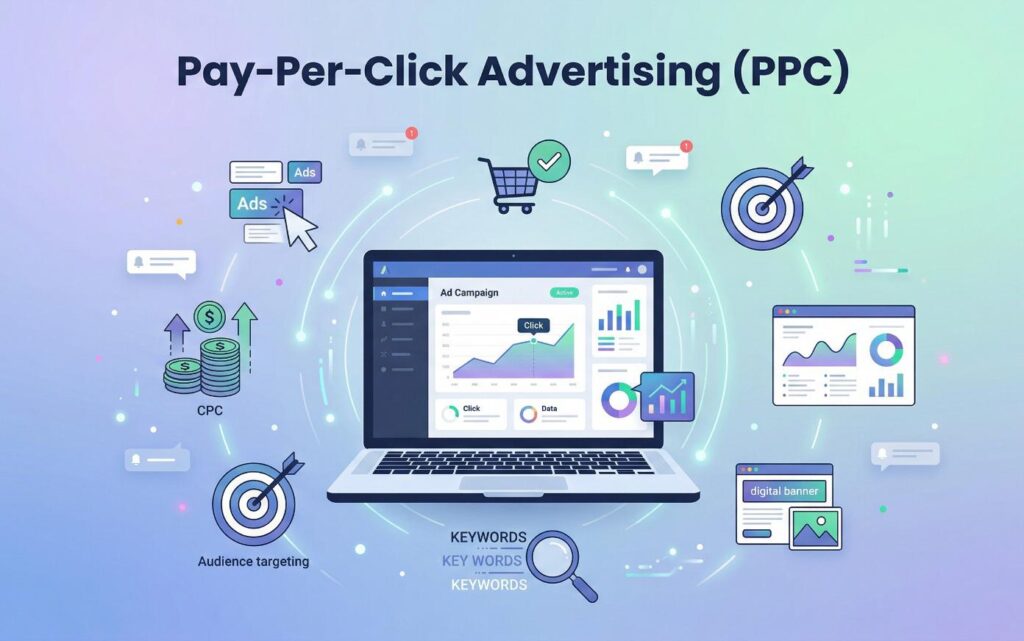
Pay- Per- Click( PPC) advertising is a fast and effective digital marketing service that allows businesses to drive immediate business to their websites. In this model, advertisers pay a figure each time someone clicks on their announcement.
PPC juggernauts are generally run on platforms similar as
- Google Advertisements( Search and Display advertisements)
- Social media networks such as Facebook, Instagram, and LinkedIn
- YouTube advertising
These advertisements can appear at the top of hunt results, on websites, or within social media feeds, icing maximum visibility.
crucial Benefits of PPC:
- Instant Traffic and Visibility
Unlike SEO, which takes time, PPC delivers immediate results. Your advertisements can start generating business as soon as the crusade goes live.
- largely Targeted juggernauts
PPC allows precise targeting grounded on keywords, position, demographics, interests, and stoner geste, icing your advertisements reach the right followership.
- Quick and Measurable Results
You can track clicks, prints, transformations, and ROI in real time, making it easier to optimize juggernauts.
- Budget Control and Flexibility
Businesses can set diurnal or yearly budgets and acclimate them grounded on performance, making PPC a flexible marketing option.
3. Social Media Marketing( SMM)
Social Media Marketing( SMM) is one of the most poignant digital marketing services that focuses on promoting your brand through popular social media platforms similar as Facebook, Instagram, LinkedIn, Twitter( X), and others.
With billions of active druggies worldwide, social media has come a important channel for businesses to connect with their followership, showcase their brand personality, and drive meaningful relations. SMM is n’t just about posting content — it involves strategic planning, content creation, followership targeting, and performance analysis.
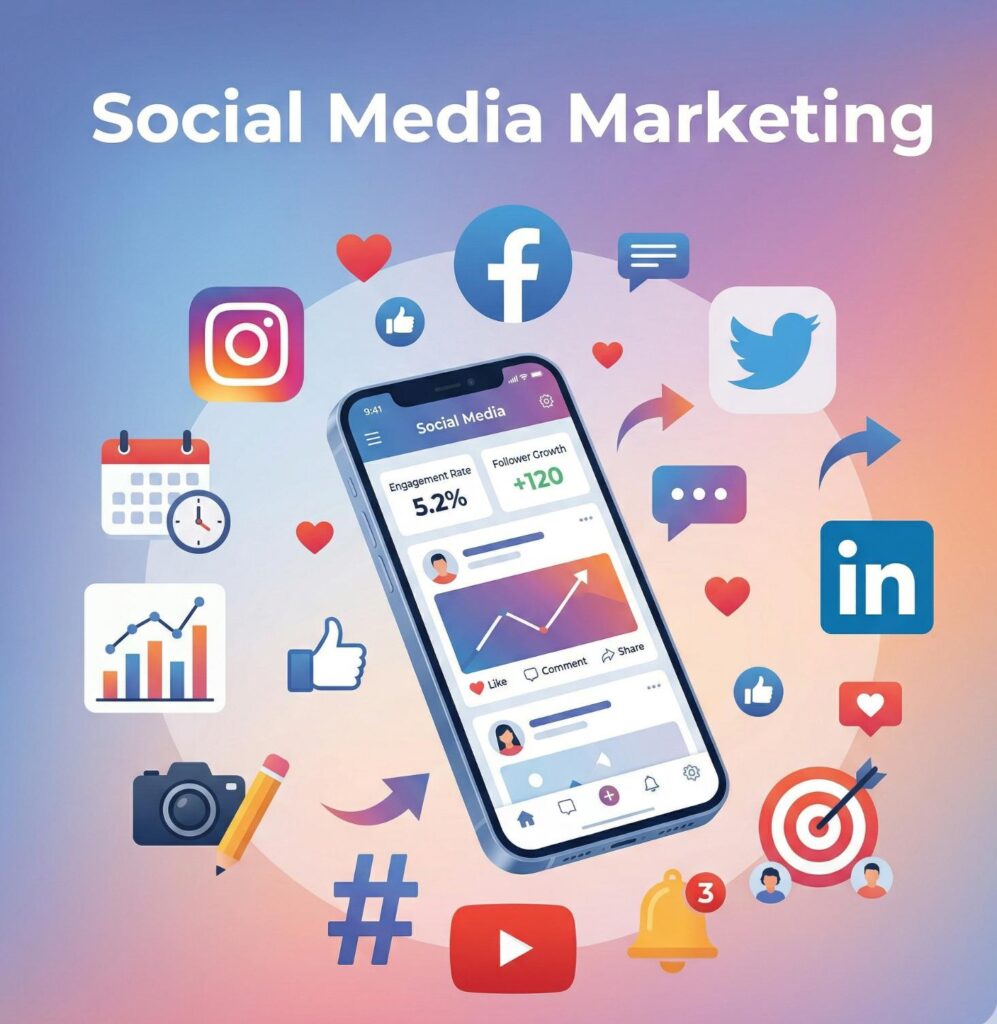
Social Media Marketing generally includes:
- Creating and cataloging engaging posts( images, vids, rolls, stories)
- Running paid advertising juggernauts
- Interacting with followers through commentary and dispatches
- uniting with influencers or generators
- assaying performance criteria to ameliorate strategy
By constantly delivering precious and engaging content, businesses can make a strong and recognizable online presence.
crucial Benefits of Social Media Marketing( SMM)
1. Brand mindfulness
Social media platforms allow businesses to reach a large and different followership snappily. By constantly posting high- quality content and maintaining an active presence, brands can increase their visibility and recognition.
Indeed druggies who are n’t laboriously searching for your product can discover your brand through posts, advertisements, or shares. Over time, this repeated exposure helps produce strong brand recall.
2. client Engagement
One of the biggest advantages of SMM is direct communication with your followership. Businesses can interact with guests through
- commentary and replies
- Direct dispatches
- Live sessions and Q&A
- pates and interactive stories
This two- way communication builds trust and makes guests feel valued. Engaged cult are more likely to come pious guests and recommend your brand to others.
3. Community Building
Social media helps businesses produce a community around their brand. rather of just dealing products, brands can make connections with their followership by participating precious content, perceptivity, and gests.
A strong community leads to:
- Advanced client fidelity
- Increased word- of- mouth marketing
- further stoner- generated content
- Stronger brand identity
When guests feel connected to your brand, they’re more likely to stay long- term and advocate for your business.
fresh Advantages of SMM:
- Cost-effective marketing compared to traditional channels
- Real- time feedback from guests
- Increased website business through social sharing
- More followership perceptivity using analytics tools
Social Media Marketing is a important tool within digital marketing services that helps businesses not only promote their products but also make meaningful connections with their followership. By fastening on brand mindfulness, engagement, and community structure, SMM enables long- term growth and client fidelity.
4. Content Marketing
Content Marketing is a strategic approach within digital marketing services that focuses on creating, publishing, and distributing precious, applicable, and harmonious content to attract and retain a easily defined followership.
rather of directly promoting products or services, content marketing aims to give useful information that solves problems, answers questions, or educates druggies. This helps make trust and gradationally attendants implicit guests toward making a purchase decision.
Content marketing is n’t just about creating happy — it’s about delivering the right communication to the right followership at the right time.
Types of Content in Content Marketing
Businesses use colorful formats to engage their followership effectively
- Blog Posts
instructional papers that help druggies understand motifs, break problems, and ameliorate knowledge while also boosting website business through SEO.
- vids
largely engaging content used for tutorials, product demonstrations, brand liar, and social media engagement.
- Infographics
Visual representations of information that make complex data easy to understand and partake.
- E-books & Attendants
In- depth coffers that give detailed knowledge, frequently used for supereminent generation by offering them in exchange for stoner information.
- Case Studies & Whitepapers( advanced)
Show real results and make credibility, especially for B2B businesses.
crucial Benefits of Content Marketing
1. Builds Authority and Trust
By constantly furnishing high- quality and instructional content, businesses place themselves as experts in their assiduity. When druggies find your content helpful, they’re more likely to trust your brand and choose your services over challengers.
Authority structure is especially important in competitive requests where trust plays a major part in decision- timber.
2. Improves SEO Performance
Content marketing plays a pivotal part in Hunt Machine Optimization( SEO). Search machines prioritize websites that regularly publish applicable and precious content.
- Benefits for SEO include
- Targeting important keywords
- adding organic business
- Improving hunt machine rankings
- Generating backlinks from other websites
Well-optimized content helps your website appear in search results when users are actively looking for solutions.
3. Educates Your Audience
Content marketing helps businesses educate their audience about their products, services, and industry trends. Instead of pushing sales, it focuses on informing users so they can make better decisions.
For example:
- A blog explains how a product works
- A video shows how to use a service
- An e-book provides detailed industry insights
An educated customer is more confident and more likely to convert.
Additional Benefits of Content Marketing
- Generates high-quality leads
- Supports different marketing courses( SEO, sociable media, dispatch)
- Increases customer retention
- Encourages sharing and engagement
- Provides long-term value (content can perform for months or years)
Content Marketing is a core component of digital marketing services that focuses on delivering value rather than direct selling. By building authority, improving SEO, and educating the audience, it helps businesses attract the right customers and nurture long-term relationships.
5. Email Marketing
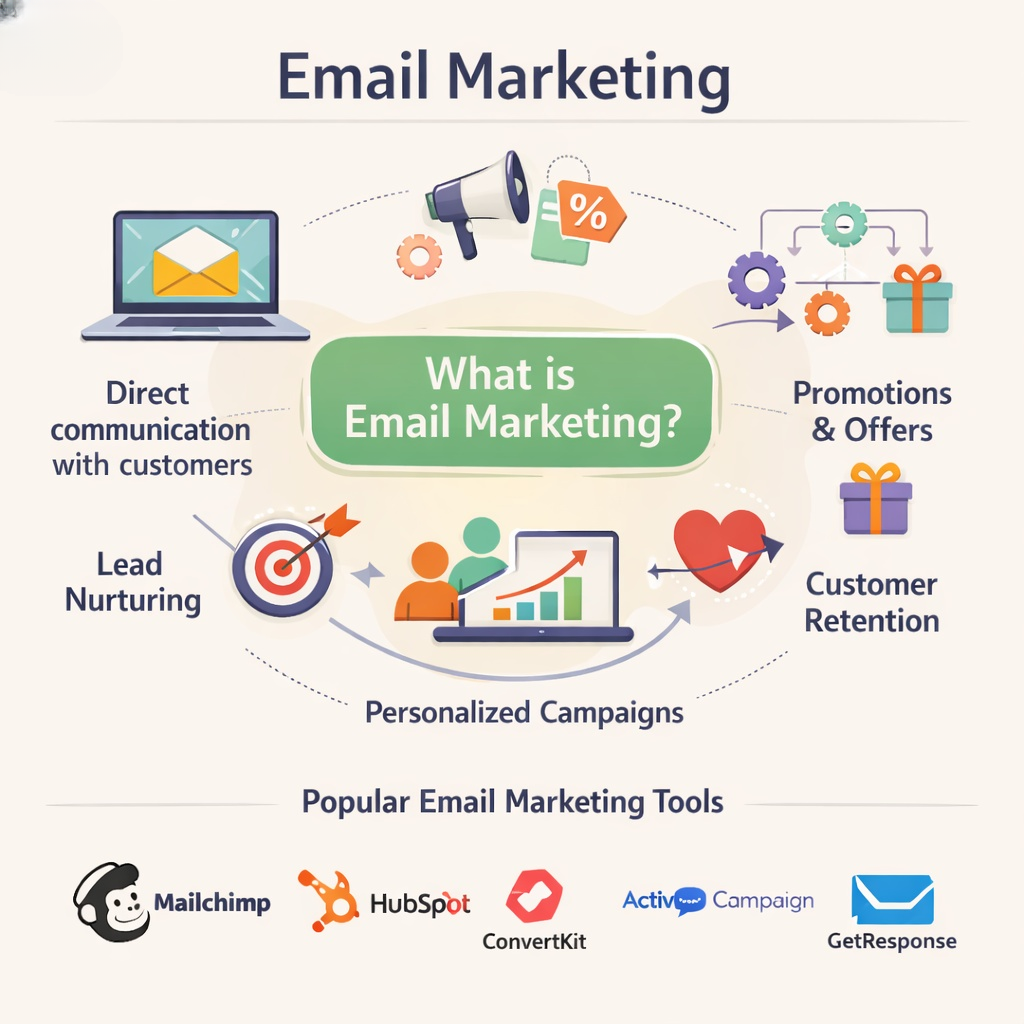
Email Marketing is one of the most powerful and reliable components of digital marketing services, focused on communicating directly with your audience through email. It is widely used to nurture leads, build strong customer relationships, and drive repeat business.
Unlike many other marketing channels, email marketing allows businesses to reach users in a more personal and direct way. It helps guide potential customers through the buying journey — from awareness to consideration and finally to conversion.
Email marketing is not just about sending promotional messages; it involves strategic planning, audience segmentation, personalization, and performance tracking.
applied to advance things, services, abatements, or singular assays .
One of the biggest energy of dispatch marketing is personalization.
Types of Email Marketing Campaigns
Businesses use different types of email campaigns depending on their goals:
- Welcome Emails
Sent to new subscribers to introduce your brand and create a positive first impression. - Promotional Emails
applied to advance things, services, abatements, or singular assays . - Newsletter Emails
Regular updates that include valuable content, company news, or insights. - Transactional Emails
Automated emails such as order confirmations, invoices, and account updates. - Drip Campaigns (Automation)
A series of automated emails sent based on user actions or behavior (e.g., signup, download, or purchase).
Key Benefits of Email Marketing
1. High Return on Investment (ROI)
Email marketing is known for delivering one of the highest ROI among all digital marketing channels. With minimal cost, businesses can reach a large audience and generate significant returns.
Since there are no heavy advertising costs, even small businesses can achieve strong results through well-planned email campaigns.
2. Personalized Communication
One of the biggest energy of dispatch marketing is personalization. Businesses can send tailored messages based on:
- User behavior
- Purchase history
- Preferences and interests
- Demographics
Personalized emails make customers feel valued and understood, which increases engagement and conversion rates. For example, sending product recommendations based on past purchases can significantly improve sales.
3. Customer Retention
Email marketing plays a crucial role in maintaining long-term relationships with customers. By staying connected through regular communication, businesses can keep their audience engaged and encourage repeat purchases.
Retention strategies include:
- Sending exclusive offers to existing customers
- Sharing useful content and updates
- Re-engaging inactive users
- Providing post-purchase support
Retaining customers is often more cost-effective than acquiring new ones, making email marketing a valuable tool for sustainable growth.
Additional Advantages of Email Marketing
- Direct communication channel (no algorithm dependency like social media)
- Easy performance tracking (open rates, click rates, conversions)
- Automation capabilities save time and effort
- Scalable campaigns for businesses of any size
Email Marketing is a highly effective digital marketing service that helps businesses build strong relationships, increase customer loyalty, and drive consistent revenue. With its high ROI, personalization capabilities, and retention benefits, it remains an essential strategy for long-term success.
6. Influencer Marketing
Influencer Marketing is a powerful strategy within digital marketing services that involves collaborating with individuals who have a strong online presence and a dedicated following. These individuals, known as influencers, have the ability to impact the opinions and purchasing decisions of their audience.
Instead of directly promoting products, brands partner with influencers to showcase their offerings in an authentic and relatable way. This approach feels more natural compared to traditional advertising, making it highly effective in today’s digital landscape.
Influencer marketing is commonly used on platforms such as Instagram, YouTube, and LinkedIn, where content creators actively engage with their followers.
Types of Influencers
Businesses can collaborate with different types of influencers based on their goals and budget:
- Nano Influencers (1K–10K followers)
Highly engaged niche audiences and strong personal connections. - Micro Influencers (10K–100K followers)
Cost-effective and ideal for targeted campaigns. - Macro Influencers (100K–1M followers)
Wider reach and strong brand visibility. - Mega Influencers (1M+ followers)
Celebrities or large creators with massive reach.
How Influencer Marketing Works
Influencer marketing campaigns typically include:
- Sponsored posts or product reviews
- Unboxing videos and tutorials
- Brand mentions in stories or reels
- Affiliate promotions or discount codes
- Long-term brand collaborations
The key is to choose influencers whose audience aligns with your target market.
Key Benefits of Influencer Marketing
1. Wider Reach and Visibility
Influencers already have an established audience. Collaborating with them allows your brand to reach a larger group of potential customers quickly, without building an audience from scratch.
2. Higher Engagement
Influencers often have strong relationships with their followers. Their audience trusts their opinions, which leads to higher engagement rates compared to traditional ads.
3. Builds Trust and Credibility
When an influencer recommends a product or service, it acts as social proof. People are more likely to trust recommendations from someone they follow than direct brand advertisements.
4. Targeted Marketing
Influencer marketing allows businesses to reach specific niche audiences. For example, a fitness brand can collaborate with a fitness influencer to reach health-conscious users.
5. Improved Conversions
Because influencer promotions feel authentic, they often lead to better conversion rates. Followers are more likely to take action when they see genuine recommendations.
Best Practices for Influencer Marketing
- Choose influencers relevant to your niche
- Focus on engagement, not just follower count
- Set clear campaign goals and expectations
- Allow creative freedom for authentic content
- Track performance using metrics like reach, engagement, and conversions
Influencer Marketing is an effective digital marketing service that helps brands connect with audiences in a more authentic and engaging way. By leveraging the trust and influence of content creators, businesses can increase visibility, build credibility, and drive better results.
7. Affiliate Marketing
Affiliate Marketing is a performance-based strategy within digital marketing services where businesses partner with individuals or companies (affiliates) who promote their products or services in exchange for a commission on each sale, lead, or action generated.
Instead of spending heavily on traditional advertising, businesses leverage affiliates to promote their offerings across various digital channels such as blogs, websites, social media platforms, and email marketing. Affiliates earn a commission only when they successfully drive results, making this a low-risk and highly cost-effective marketing model.
How Affiliate Marketing Works
Affiliate marketing typically follows a simple process:
- A business creates an affiliate program and provides unique tracking links to affiliates.
- Affiliates promote the product or service using these links through their platforms.
- When a user clicks the link and completes a desired action (purchase, signup, etc.), it is tracked.
- The chapter earns a license grounded on the concurred terms.
This system ensures transparency and accurate performance tracking for both businesses and affiliates.
Types of Affiliate Marketing
Businesses can choose different affiliate models based on their goals:
- Pay-Per-Sale (PPS)
Affiliates earn a delegation only when a trade is made.
- Pay-Per-Lead (PPL)
Commission is given when a user completes an action like signing up or filling out a form.
- Pay-Per-Click (PPC) (affiliate model)
Affiliates obtain grounded on the number of clicks generated.
Key Benefits of Affiliate Marketing
1. Cost-Effective and Low Risk
One of the biggest advantages of affiliate marketing is that businesses pay only for results. There are no upfront advertising costs, making it a budget-friendly option, especially for startups and small businesses.
2. Expanded Reach
Affiliates promote your products to their own audience, helping your brand reach new markets and potential customers that you may not be able to access directly.
3. Performance-Based Results
Since commissions are tied to actual performance, businesses can ensure that their marketing budget is being used efficiently. This makes affiliate marketing highly measurable and ROI-driven.
4. Builds Credibility and Trust
Affiliates often promote products through reviews, recommendations, or tutorials. These methods feel more authentic, which increases trust among potential customers and improves conversion rates.
5. Scalability
Affiliate programs can easily be scaled by partnering with more affiliates. The more affiliates you have, the greater your reach and potential sales.
Best Practices for Affiliate Marketing
- Choose affiliates relevant to your niche
- Provide high-quality promotional materials
- Offer competitive commission structures
- Track performance using analytics tools
- Maintain strong relationships with affiliates
Affiliate Marketing is a powerful and cost-effective digital marketing service that allows businesses to grow through partnerships. By leveraging the reach and influence of affiliates, companies can increase sales, expand their audience, and achieve measurable results with minimal risk.
Benefits of Digital Marketing Services
Investing in digital marketing services offers a wide range of advantages for businesses of all sizes. From increasing visibility to driving conversions and building long-term customer relationships, digital marketing provides the tools needed to grow in a competitive online landscape.
underneath are the crucial benefits explained in item
1. Global Reach
One of the biggest betters of digital marketing is the capability to transfer a across-the-board followership. Unlike traditional marketing, which is often limited by geography, digital platforms allow businesses to connect with customers from anywhere in the world.
Through channels like search engines, social media, and websites, your brand can be discovered by users across different countries and regions. This is especially beneficial for businesses looking to expand beyond local markets and scale internationally.
Even small businesses can compete globally with the right digital strategy.
2. Better Conversion Rates
Digital marketing focuses on targeting the right audience, which significantly improves conversion rates. Instead of reaching a broad audience, businesses can focus on users who are genuinely interested in their products or services.
By using strategies such as:
- SEO (targeting intent-based keywords)
- PPC (targeting specific audiences)
- Email marketing (personalized campaigns)
Businesses can guide users through the buying journey more effectively. This results in higher chances of converting leads into paying customers.
3. Brand Awareness
Consistent digital presence helps build strong brand awareness over time. When users repeatedly see your brand across different platforms — such as Google, social media, or email — it creates familiarity and trust.
Content marketing, social media posts, and online ads all contribute to increasing brand visibility. The more people recognize your brand, the more likely they are to choose you over competitors.
Strong brand awareness also leads to:
- Increased customer trust
- Higher recall value
- Better customer loyalty
4. Scalability
Businesses can start with a small budget and gradually increase their investment as they begin to see results.
For example:
- Increase ad spend on high-performing campaigns
- Expand SEO efforts to target more keywords
- Scale social media campaigns to reach a larger audience
This flexibility allows businesses to grow at their own pace without taking unnecessary risks. It similarly ensures that coffers are applied efficiently.
5. Competitive Advantage
In today’s competitive market, businesses that leverage digital marketing effectively gain a significant advantage over those that do not. A strong online presence helps you stand out and attract more customers.
By using data-driven strategies, businesses can:
- Understand competitor performance
- Identify market trends
- Optimize campaigns for better results
Companies that invest in digital marketing are more likely to stay ahead, adapt quickly to changes, and capture more market share.
Digital marketing services offer powerful benefits that go beyond just promotion. From expanding your reach to improving conversions and gaining a competitive edge, these services play a crucial role in modern business success.
By leveraging these advantages strategically, businesses can achieve sustainable growth and long-term success in the digital world.
How to cherry-pick the Right Digital Marketing favors
Choosing the right digital marketing services is a crucial step for any business aiming to grow online. With so many strategies and platforms available, selecting the right combination can feel overwhelming. However, the key lies in aligning your marketing efforts with your business goals, target audience, and budget.
A well-planned strategy ensures that your investment delivers maximum results and long-term growth. Below are the essential steps to help you make the right choice:
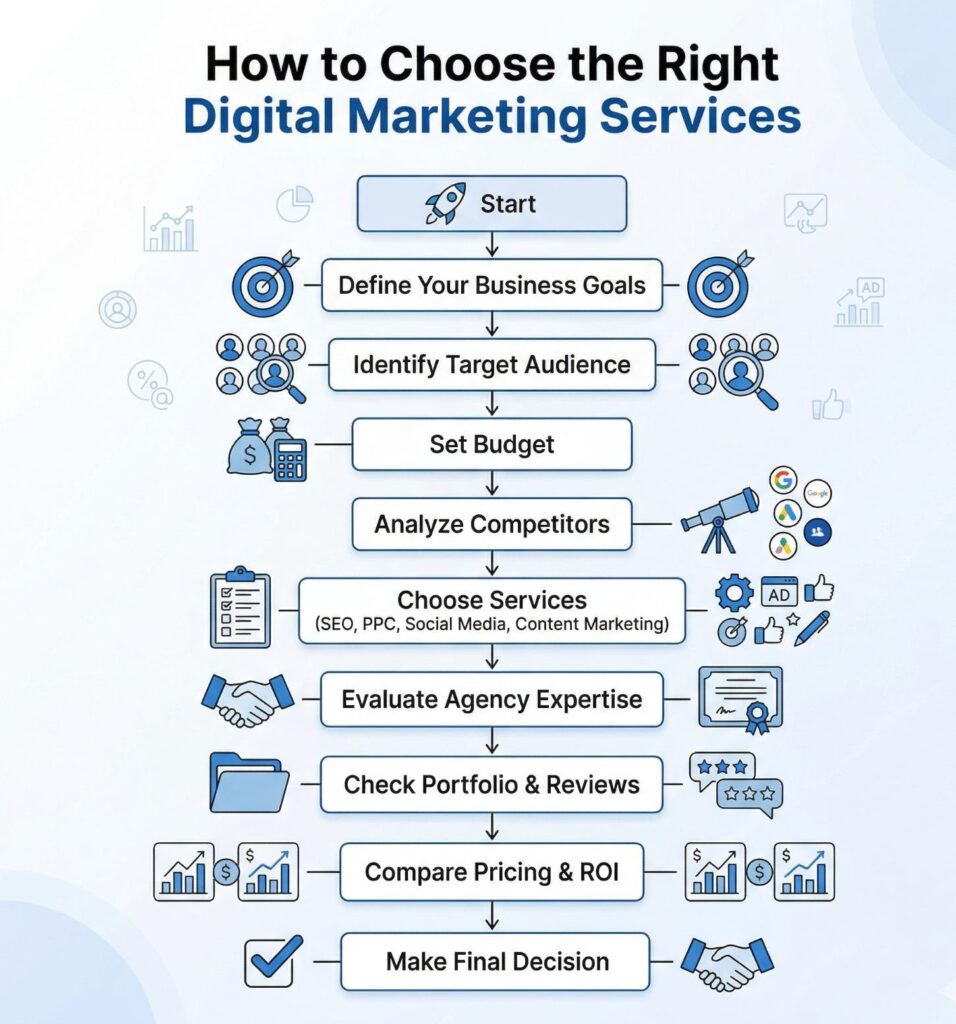
1. Define Your Goals
The first step in choosing the right digital marketing services is to clearly define your business goals. Without a clear objective, your marketing efforts may lack direction and effectiveness.
Ask yourself:
- Do you want to increase brand awareness?
- Are you focused on generating leads?
- Do you want to drive more sales or conversions?
- Are you aiming to improve website traffic?
Each goal requires a different approach. For example:
- SEO and content marketing are ideal for long-term visibility
- PPC is best for quick leads and immediate results
- Social media marketing is effective for brand awareness and engagement
- Having clear goals helps you choose the right strategies and measure success effectively.
2. Understand Your Audience
Knowing your target audience is essential for selecting the right marketing services. You need to understand who your customers are and how they behave online.
Key factors to consider:
- Age, gender, and demographics
- Interests and preferences
- Online behavior and browsing habits
- Platforms they use (Instagram, LinkedIn, YouTube, etc.)
For example:
- A younger audience may be more active on Instagram and YouTube
- B2B audiences are more active on LinkedIn
- Local customers may rely heavily on Google search
When you understand your audience, you can create more relevant campaigns that attract and convert the right people.
3. Analyze Your Budget
Budget plays a major role in deciding which digital marketing services to invest in. One of the biggest edges of digital marketing is its inflexibility you can bolt small and scale as you crop.
Consider:
- How much can you invest monthly?
- Which channels provide the best ROI for your business?
- Are you focusing on short-term results or long-term growth?
For example:
- SEO requires time but offers long-term benefits
- PPC requires budget but delivers quick results
- Social media can be cost-effective with organic and paid strategies
A well-planned budget ensures that your resources are used efficiently without overspending.
4. Choose the Right Channels
Not all digital marketing channels will work for every business. Choosing the right platforms is essential for reaching your target audience effectively.
Some common channels include:
- Search engines (SEO & Google Ads)
- Social media platforms (Facebook, Instagram, LinkedIn)
- Email marketing
- Content marketing (blogs, videos)
Focus on:
- Where your followership spends maximum of their time
- Which platforms align with your business type
- Channels that deliver measurable results
For example:
- E-commerce businesses benefit from social media and PPC
- Service-based businesses benefit from SEO and content marketing
- Choosing the right channels improves efficiency and maximizes results.
5. Work with Experts
Digital marketing requires expertise, experience, and continuous optimization. Partnering with a professional digital marketing agency or expert can help you achieve better results in less time.
Experts can:
- Develop customized strategies
- Optimize campaigns for better performance
- Track and analyze data
- Stay updated with the latest trends and algorithms
Working with professionals allows you to focus on your core business while ensuring your marketing efforts are handled effectively.
Digital marketing is constantly evolving, driven by rapid technological advancements and changing consumer behavior. As competition increases, businesses must stay updated with the latest trends to remain relevant and effective in their marketing efforts.
The future of digital marketing services will be shaped by innovation, data-driven strategies, and more personalized customer experiences. Below are some key trends that are transforming the digital marketing landscape:
1. Artificial Intelligence (AI)
Artificial Intelligence is revolutionizing digital marketing by enabling smarter and more efficient campaigns. AI helps businesses analyze large amounts of data, predict customer behavior, and automate decision-making processes.
Applications of AI in digital marketing include:
- Chatbots for instant customer support
- Predictive analytics for better targeting
- Automated ad optimization
- Personalized product recommendations
AI allows marketers to deliver highly relevant content and improve overall campaign performance.
2. Voice Search Optimization
With the growing use of voice assistants like Alexa, Google Assistant, and Siri, voice search is becoming increasingly popular. Users now prefer speaking their queries instead of typing them.
This shift requires businesses to:
- Focus on conversational keywords
- Optimize for long-tail search queries
- Improve local SEO strategies
Voice search optimization helps businesses capture a new segment of users and stay ahead in search engine rankings.
3. Video Marketing
Video content is dominating the digital space and is expected to grow even further in the coming years. Platforms like YouTube, Instagram Reels, and TikTok have made video one of the most engaging forms of content.
Benefits of video marketing:
- Higher engagement rates
- Better storytelling and brand connection
- Increased conversion rates
Businesses that invest in video content can capture attention quickly and communicate their message more effectively.
4. Personalization
Modern consumers expect personalized experiences. Generic marketing messages are no longer effective. Personalization involves delivering tailored content based on user preferences, behavior, and past interactions.
Examples include:
- Personalized email campaigns
- Product recommendations
- Customized website experiences
Personalization improves customer satisfaction, engagement, and conversion rates.
5. Automation
Marketing automation helps businesses streamline repetitive tasks and improve efficiency. It allows marketers to focus more on strategy and creativity rather than manual work.
Automation can be used for:
- Email campaigns
- Social media scheduling
- Lead nurturing workflows
- Customer segmentation
By automating processes, businesses can save time, reduce errors, and maintain consistency in their marketing efforts.
Conclusion of Future Trends
The future of digital marketing services lies in adopting advanced technologies and focusing on customer-centric strategies. Businesses that embrace AI, personalization, and automation will be better positioned to deliver impactful and scalable marketing campaigns.
Conclusion
Digital marketing services are no longer optional — they have become a necessity for businesses that want to grow and succeed in today’s digital-first world. As more consumers move online, having a strong digital presence is essential to stay competitive.
By leveraging the right combination of strategies such as:
- Search Engine Optimization (SEO)
- Pay-Per-Click Advertising (PPC)
- Social Media Marketing
- Content Marketing
- Email Marketing
Businesses can effectively reach their target audience, generate quality leads, and increase conversions.
Digital marketing not only helps in attracting customers but also in building long-term relationships through consistent engagement and personalized communication.
Whether you are a startup looking to build brand awareness or an established business aiming to scale, investing in digital marketing services can unlock new growth opportunities and ensure long-term success.
Final Thought
The digital world is continuously evolving, and businesses that adapt, innovate, and stay updated with the latest trends will always stay ahead of the competition.